Posted on December 10th, 2021
Let’s be honest: no flower blooms continuously through a New England winter. But that doesn’t mean your Massachusetts or New Hampshire landscape has to look dull and lifeless from November through March. With smart plant selection and strategic landscape design, you can create a yard that offers visual interest, color, and texture in every season, from spring’s first blooms to winter’s evergreen structure and ornamental grasses dusted with snow.
The secret to year-round garden color isn’t finding plants that bloom nonstop (they don’t exist in our climate). Instead, it’s about layering different plants that shine at different times: spring bulbs and flowering shrubs, summer perennials, fall foliage and late bloomers, and winter evergreens and berries. When you combine these elements thoughtfully, your property maintains curb appeal and natural beauty throughout the entire year.
In this guide, we’ll walk you through the best flowers and plants for four-season color in New England, organized by when they provide their greatest impact. We’ll also share practical tips for design, maintenance, and how professional landscape services can help you achieve a landscape that looks great in January, June, and every month in between.
Our team at Turf Unlimited provides comprehensive plant health care and landscape maintenance services throughout Massachusetts and New Hampshire. Contact us today or call (888) 649-9919 to discuss your vision and get expert guidance.
Here’s what you need to know about creating year-round color in Massachusetts and New Hampshire gardens:
In USDA hardiness zones 5 and 6 (which cover most of Massachusetts and New Hampshire), we experience cold winters with snow, a short spring growing season, warm summers, and a spectacular but brief fall.
“Year-round color” in this climate means:
Spring (April to May): Early bulbs, flowering trees, and spring-blooming perennials.
Summer (June to August): Peak growing season with abundant perennial blooms and lush foliage.
Fall (September to October): Fall foliage, late-blooming flowers, ornamental grasses, and persistent berries.
Winter (November to March): Evergreen structure, ornamental bark, dried seed heads, and colorful stems.
A well-designed landscape includes “something for every season.” This typically means:
Spring is when New England landscapes wake up. After months of dormancy, the first blooms are especially welcome.
| Plant | Bloom Time | Features | Growing Conditions |
|---|---|---|---|
| Snowdrops | Late February to March | White nodding flowers; first to bloom | Partial shade, well-drained soil |
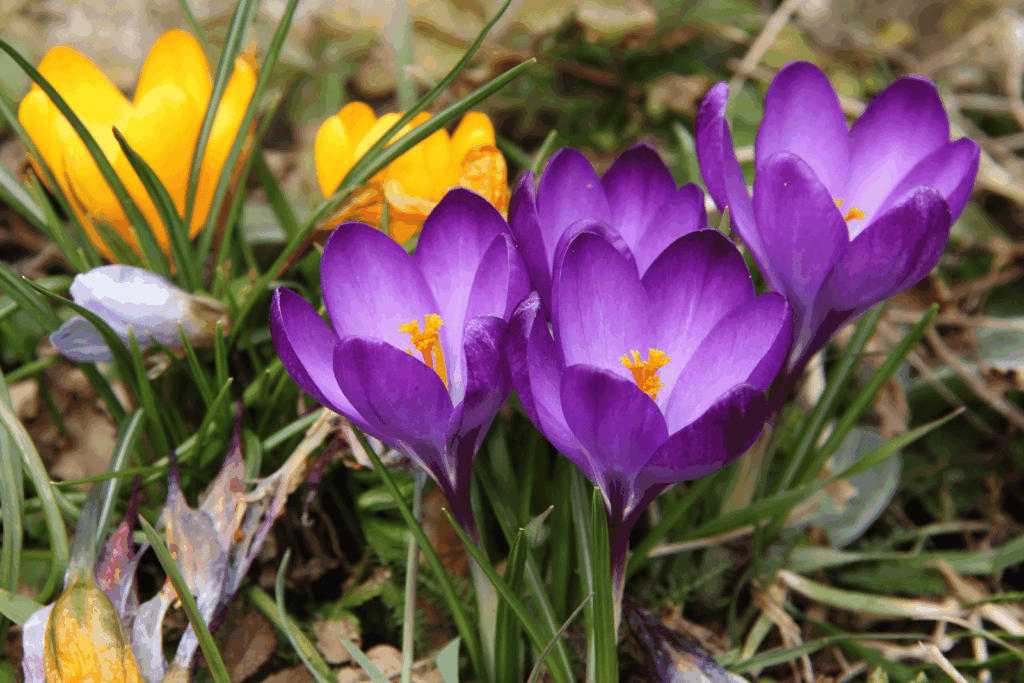
| Crocuses | March to Early April | Purple, white, yellow; naturalizes well | Full sun to partial shade |
| Daffodils | April | Yellow, white, orange; deer-resistant | Full sun, well-drained soil |
| Tulips | Late April to May | Wide color range; classic spring flower | Full sun, protect from deer |
| Hyacinths | April | Fragrant, bold colors | Full sun to partial shade |
Planting Tip: Plant bulbs in fall (September to October) for spring blooms. Group them in clusters of 10 or more for maximum visual impact.
These shrubs provide reliable color year after year:
Forsythia: Bright yellow blooms in early April; fast-growing hedge option.
Rhododendron and Azalea: Late April to May; massive flower displays in pink, purple, white, red. Prefer acidic soil (common in New England).
Lilac: Late May; incredibly fragrant; classic New England shrub.
Flowering Dogwood: White or pink bracts in May; beautiful fall foliage too.
Hellebores (Lenten Rose): Blooms March to April; evergreen foliage.
Bleeding Heart: Delicate pink or white heart-shaped flowers in May.
Virginia Bluebells: Native wildflower; blue flowers in April to May.
Summer is peak season for New England gardens. These plants provide reliable color from June through August.
Daylilies: Extremely reliable; bloom for weeks in July; many varieties available.
Coneflowers (Echinacea): Native; purple, pink, white, orange; drought-tolerant once established.
Black-Eyed Susans (Rudbeckia): Bright yellow flowers all summer; native and low-maintenance.
Bee Balm (Monarda): Red, pink, purple; attracts pollinators; native.
Phlox: Fragrant clusters of pink, purple, white flowers; mid-summer bloomer.
Catmint (Nepeta): Lavender-blue flowers; long bloom period; deer-resistant.
Hostas: Grown primarily for foliage (green, blue, yellow, variegated); also produce lavender or white flowers in summer.
Astilbe: Feathery plumes of pink, red, white in June to July; loves moist soil.
Coral Bells (Heuchera): Colorful foliage (purple, lime, coral); delicate flower spikes.
Hydrangeas: Big, showy blooms in blue, pink, white from July to September. Very popular in New England.
Roses: Require more care, but offer unmatched beauty and fragrance. Choose disease-resistant varieties.
Butterfly Bush (Buddleia): Attracts butterflies; long bloom period; prune hard in spring.
Maintenance Note: Summer perennials benefit from deadheading (removing spent flowers) to encourage continued blooming. Our pruning services can help keep your landscape looking its best.
Fall is New England’s most spectacular season. Beyond the famous foliage of maple and oak trees, many plants provide late-season color.
Asters: Purple, pink, white daisy-like flowers in September to October; native.
Sedum (Autumn Joy): Succulent foliage all summer; pink-to-rust flowers in fall; seed heads persist into winter.
Mums (Chrysanthemums): Classic fall flower; available in every autumn color.
Goldenrod: Native; yellow plumes in late summer and fall; supports pollinators.
These grasses look good from summer through winter:
Miscanthus (Maiden Grass): Tall, feathery plumes; turns golden in fall.
Panicum (Switchgrass): Native; airy texture; burgundy fall color.
Pennisetum (Fountain Grass): Bottlebrush-like seed heads; graceful arching form.
Ornamental grasses are drought-tolerant, low-maintenance, and provide movement and texture. Leave them standing through winter for visual appeal and wildlife habitat.
Burning Bush (Euonymus): Brilliant red fall foliage.
Viburnum: Fall color plus persistent berries that birds love.
Winterberry Holly: Deciduous holly with bright red berries that last into winter (especially striking after leaves drop).
Blueberries: Edible fruit in summer; fiery red fall foliage.
Winter landscapes don’t have to be boring. These plants shine when everything else is dormant.
Evergreens are the backbone of winter landscapes:
| Plant Type | Examples | Benefits |
|---|---|---|
| Evergreen Shrubs | Boxwood, rhododendron, holly, yew | Provide green color and structure; excellent foundation plantings |
| Evergreen Trees | White pine, spruce, fir, arborvitae | Create privacy screens and windbreaks; backdrop for other plants |
| Ground Covers | Pachysandra, wintercreeper, creeping juniper | Cover bare ground; prevent erosion |
Winter Care Tip: Heavy snow can damage evergreens. Gently brush off snow after storms, but don’t try to remove ice (you may break branches). If you have concerns about winter damage, our team can help with protective measures.
Red Twig Dogwood: Bright red stems stand out against snow.
Yellow Twig Dogwood: Cheerful yellow stems.
River Birch: Peeling, cinnamon-colored bark.
Paperbark Maple: Exfoliating bark in shades of cinnamon and rust.
Leaving certain perennials standing through winter provides food for birds and visual appeal:
Sedum: Dried flower heads.
Coneflowers: Seed heads attract finches.
Ornamental Grasses: Feathery plumes and golden foliage.
Winterberry Holly: Bright red berries persist all winter.
Don’t choose plants that all bloom in June. Spread out bloom times:
Early Spring: Bulbs, forsythia, hellebores
Late Spring: Azaleas, lilacs, bleeding heart
Early Summer: Peonies, iris, early daylilies
Mid-Summer: Coneflowers, black-eyed Susans, hydrangeas
Late Summer and Fall: Sedum, asters, ornamental grasses
Winter: Evergreens, berries, interesting bark
A well-designed bed includes:
Tall plants in back (shrubs, tall grasses, back-of-border perennials)
Medium plants in the middle (most perennials)
Short plants in front (ground covers, edging plants, low perennials)
This creates depth and ensures every plant is visible.
Native plants are adapted to New England’s climate, soil, and pests. They require less water, fertilizer, and pesticides, and they support local wildlife.
Great natives for Massachusetts and New Hampshire include:
Your lawn is part of your year-round landscape too. A healthy, well-maintained lawn provides a green backdrop for your plantings from spring through fall. Core aeration, overseeding, and proper fertilization keep your turf thick and healthy. Learn more about our comprehensive lawn care services for Massachusetts and New Hampshire.
Beautiful landscapes require ongoing care. Here’s what your plants need to stay healthy and colorful:
Need Help? Our team at Turf Unlimited offers comprehensive tree and shrub care, including fertilization, pest control, pruning, and seasonal maintenance. We’ll keep your landscape looking its best year-round. Contact us or call (888) 649-9919 for a consultation.
If you’re starting from scratch or doing a major redesign, professional help ensures you:
Professional tree and shrub care includes:
Consistent watering is critical, especially for newly planted landscapes. If you have an irrigation system or are considering one, our sprinkler installation and sprinkler service teams can design, install, and maintain systems that keep your landscape hydrated efficiently.
Native perennials (coneflowers, black-eyed Susans, asters), ornamental grasses (miscanthus, switchgrass), and evergreen shrubs (boxwood, yew, holly) are all excellent low-maintenance choices. Once established, they require minimal watering, fertilization, and pest control.
Yes! Fall (September to October) is actually one of the best times to plant perennials in Massachusetts and New Hampshire. Soil is still warm, rainfall is more consistent, and plants have time to establish roots before winter. They’ll be ready to take off in spring.
Water evergreens well before the ground freezes. Apply a 2 to 3 inch layer of mulch around plant bases (but not touching stems) to insulate roots. Brush heavy snow off evergreen branches. Avoid using salt near plantings. For sensitive plants, consider burlap screens to block winter wind and sun.
Leave them standing! Ornamental grasses look beautiful through fall and winter. Cut them back in early spring (March to April) before new growth emerges. Use hedge shears or tie the grass into a bundle and cut 4 to 6 inches above ground level.
Plant evergreens for green structure, red or yellow twig dogwoods for stem color, winterberry holly for bright red berries, and leave ornamental grasses and perennial seed heads standing. Consider adding winter containers with evergreen boughs, colorful stems, and berries for seasonal front-door displays.
Achieving true year-round garden color in Massachusetts and New Hampshire isn’t about finding magical plants that bloom nonstop. It’s about thoughtfully combining plants that each contribute something special at different times. When you layer spring bulbs with summer perennials, fall grasses, and winter evergreens, you create a landscape that offers color, texture, and beauty no matter what month you look outside.
At Turf Unlimited, we help homeowners throughout Massachusetts and New Hampshire design, install, and maintain beautiful landscapes that perform in all four seasons. From selecting the right plants for your property to providing expert care year after year, we’re here to make your landscape vision a reality.
Ready to transform your yard into a year-round showpiece? Contact us today or call (888) 649-9919 to schedule a consultation. Let’s create something beautiful together.